Beam and stability
Wide-bodied and heavy. It sits still at anchor, which matters over four nights more than speed does.
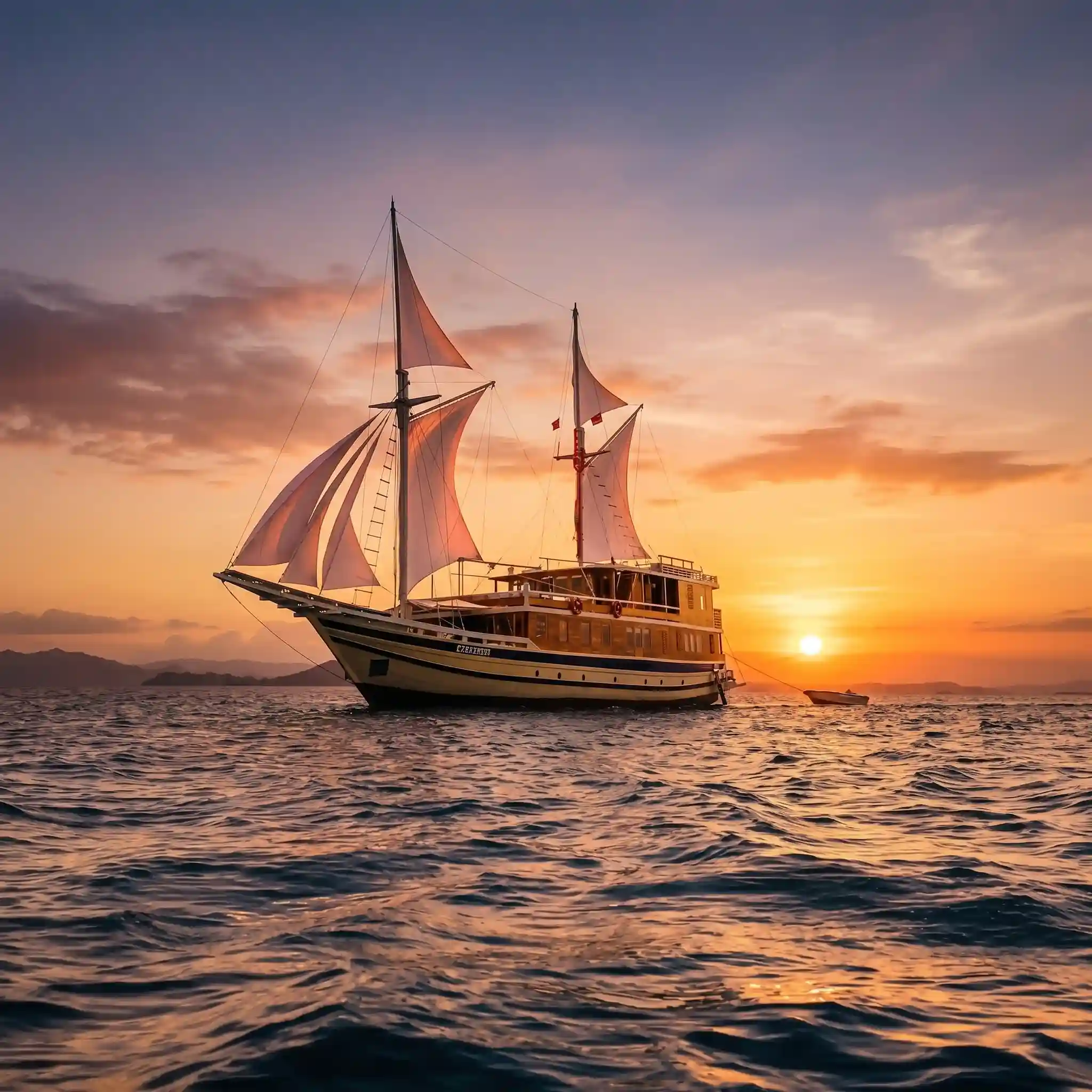
The traditional hull
A hull type, not a brand. Built by Konjo and Bugis yards from ironwood and teak, and fitted out to a standard that has very little to do with its origins.
A phinisi is the traditional Indonesian sailing hull - typically 30 to 45 metres, five to seven cabins, ten to fourteen guests - handbuilt in ironwood and teak and fitted out as a modern liveaboard.
What it changes
Wide-bodied and heavy. It sits still at anchor, which matters over four nights more than speed does.
Long open decks - dive deck aft, dining amidships, sun deck up top, all separate.
Most run under engine on schedule, but the rig is real and the crossings are often sailed.
Not the boat for covering distance fast. It is the boat for the distance being the point.
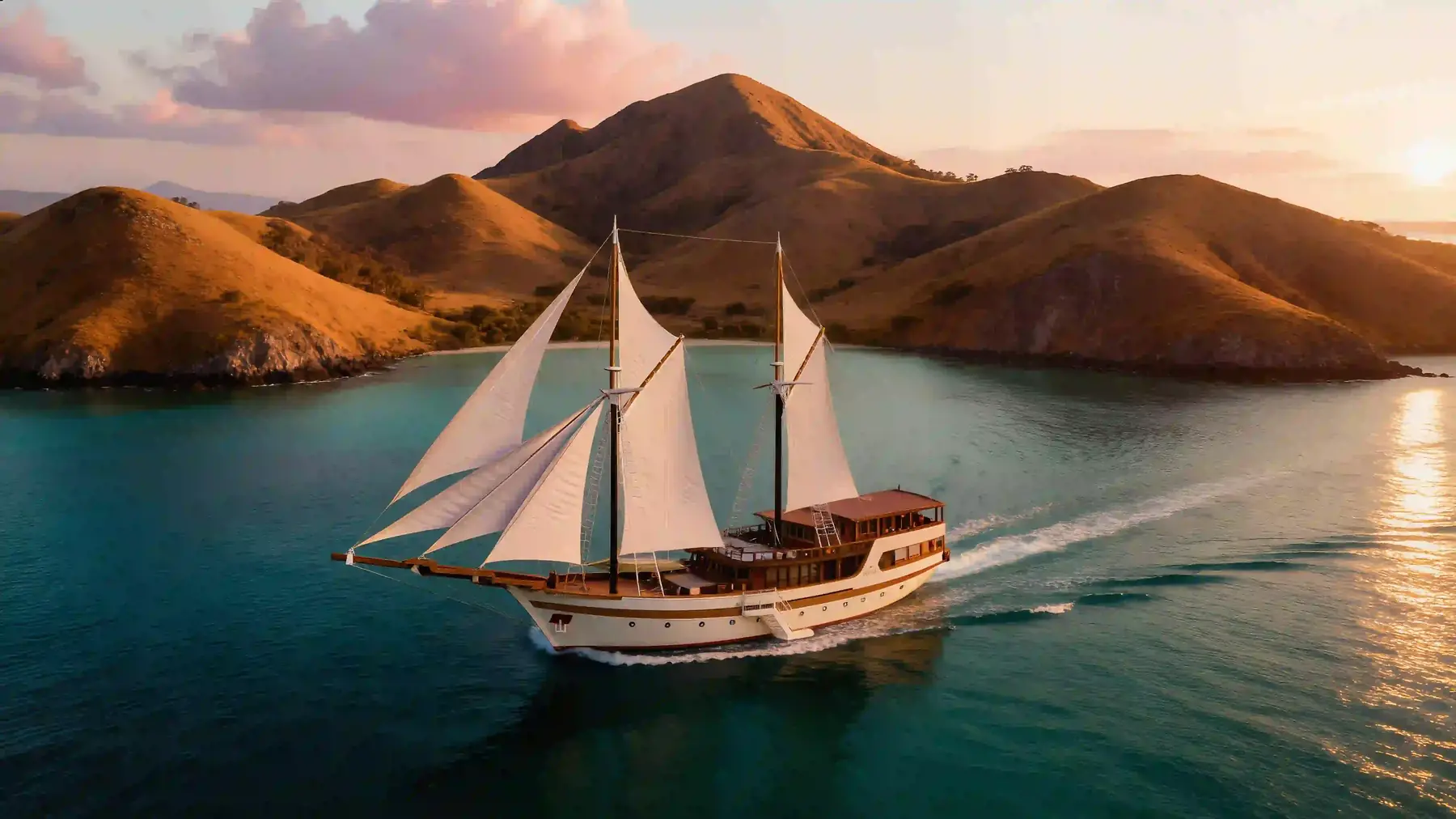
Phinisi are still built by hand in South Sulawesi, by Konjo and Bugis yards working from ironwood and teak without formal plans - the shape is carried by the builders rather than drawn.
What sits on top of that hull is entirely modern: ensuite cabins, air conditioning, a proper dive deck with compressor and rinse tanks, and tenders on davits.
That combination is the whole appeal. The hull is a century of boatbuilding; everything you touch is current.
On board
Ten cabins in five categories, carrying 18 to 23 guests. Every trip is quoted on request.
2 cabins · 2–3 guests each. Queen bed, private bathroom, jacuzzi, sea view. Ask for price.
2 cabins · 2–3 guests each. Queen bed, private bathroom, sea view. Ask for price.
1 cabin · 2–3 guests. Queen bed, private bathroom, private balcony. Ask for price.
4 cabins · 2 guests each. Queen bed, bathroom, porthole view. Ask for price.
1 cabin · 2 guests. Bunk beds, bathroom, porthole view. Ask for price.
Tell us guests and nights and we will send which hulls are genuinely free on your dates.